



Newari Food: A Complete Guide to Nepal’s Most Diverse Cuisine
by Rohan Shrestha on 30/03/2026
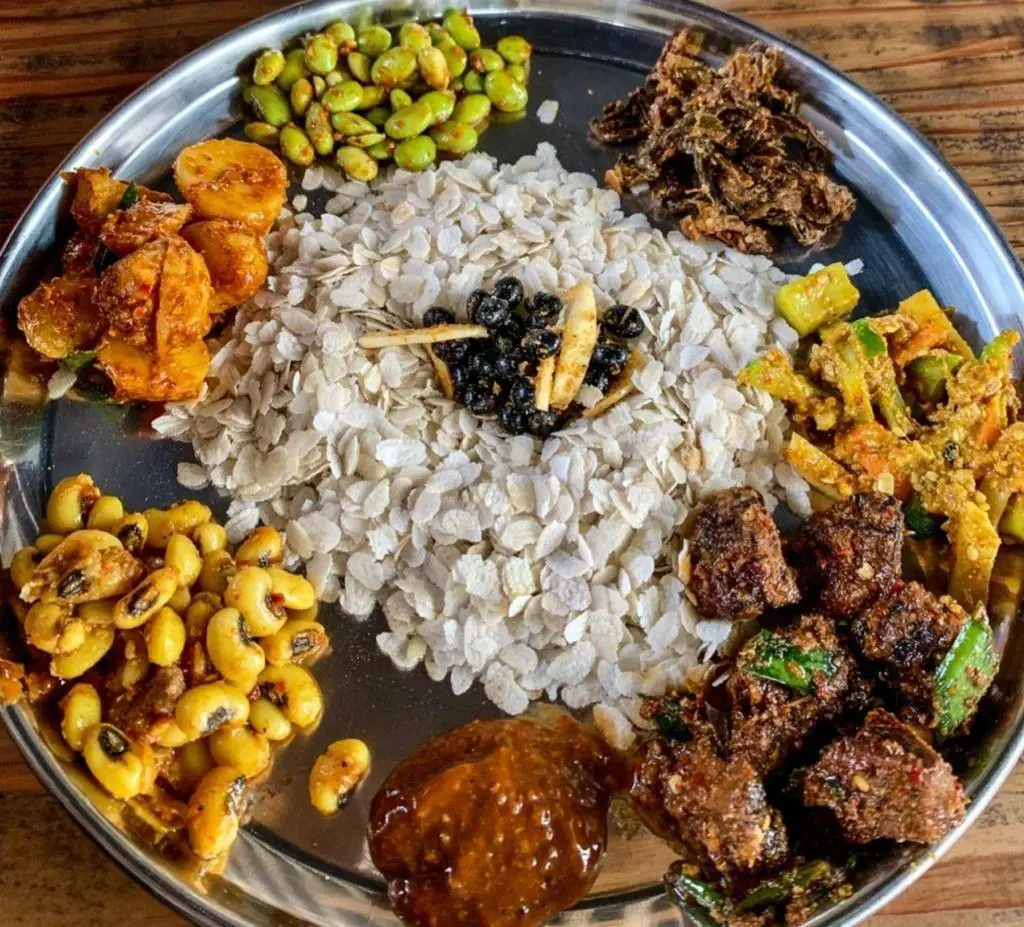
Nepal has no single cuisine. That’s the honest answer if someone asks what Nepali food is. The Himalayan north eats differently from the Terai south. Hill communities have their own staples. And sitting right in the middle of all of it — geographically and culturally — is the Kathmandu Valley, home to the Newar community and their kitchen, which has been quietly developing for over a thousand years.
Newari food is not just Nepal’s most varied local cuisine. With over 200 documented dishes, it’s one of the most detailed food cultures in the entire subcontinent. And most people outside Nepal have never heard of it.
This guide covers everything: what Newari cuisine actually is, what’s in a Newari khaja set, the full list of Newari food items you’ll find at a traditional feast, where to find Newari khaja set near you, and what to expect from a Newari thali.
What Is Newari Food?
The Newar community are the indigenous people of the Kathmandu Valley. They built the valley’s temples, established its trade routes, and created a food culture that draws from those trade connections — Newari cuisine carries influence from both Indian and Chinese cooking, because Newars were trading with both for centuries.
That mixed heritage shows up in the food. You’ll find dishes that feel close to South Asian spiced cooking alongside fermented flavors and techniques that have more in common with East Asian traditions. The result is a Newari dish menu that spans 200+ items: meats, vegetables, beaten rice, legume pancakes, fermented preparations, and desserts that don’t quite resemble anything else in the region.
The spices that do most of the work are cumin, coriander, black pepper, chillies, bay leaves, cardamom, cinnamon, ginger, and garlic. Not unusual individually — but the combinations and proportions in Newari cooking produce an aroma that’s immediately distinct.
The 3 Categories of Newari Cuisine
Newari food breaks into three broad categories. Once you understand the structure, the rest of the food list makes more sense.
1. Main Meals
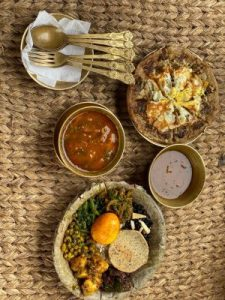
For lunch and dinner, Newars eat boiled rice (Ja) alongside vegetable dishes (Palacha), accompaniments like Tukan cha, and meat preparations. The most well-known Newari meat dish is Choila — boiled and spiced minced meat, typically buffalo, mixed with mustard oil, ginger, garlic, and dried chilli. Palula is another common meat item. Salads are served alongside: cucumber (Tusi) and radish (Lain) are standard.
2. Snack Items (Khaja)
This is where Newari food gets interesting for outsiders. The snack category is large and varied:
- Jakimari — a flat bread
- Gwaramari — sweet fried dough, round and slightly crispy outside, soft inside
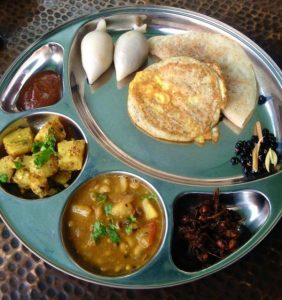
- Bara (also called Woh) — a lentil pancake made from black lentil (kalo dal) batter, eaten with spicy tomato pickle. This is probably the single most recognizable Newari snack food.
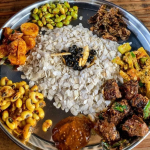
The Newari khaja set comes from this snack category — it’s a curated plate of Newari snack items served together, and it’s what most restaurants mean when they put a Newari set food option on the menu.
3. Feasts
The full Newari feast is its own category entirely. More on this below.
Newari Khaja Set: What’s in It?
The Newari khaja set is how most people first encounter Newari cuisine. It’s served at dedicated Newari restaurants and local khaja ghar across the Kathmandu Valley — and increasingly in cities across Nepal.
A standard Newari khaja set includes a combination of:
- Chiura — beaten/flattened rice, the anchor of most Newari snack meals
- Bara — black lentil fritters, served warm
- Choila — spiced and char-grilled buffalo or chicken meat
- Alu tama — potato and bamboo shoot curry
- Spicy tomato pickle (achar)
- Boiled egg or soyabean preparations
- Chhyang — traditional rice wine, often served alongside
Newari khaja set price varies depending on the restaurant and location. In Kathmandu, a basic set typically runs between NPR 200–500. At dedicated Newari restaurants in Thamel or Patan, the price can go higher with larger portions and more items.
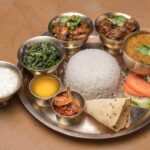
Traditional Newari Feast: The Full Newari Thali
The Newari thali at a traditional feast is a different level from the everyday khaja set. It’s served on tapari — disposable leaf plates that are genuinely ingenious, eco-friendly, and have been used in Newari communities for generations.
A full Newari feast platter typically includes:
| Newari Food Name | What It Is |
|---|---|
| Chiura | Beaten/flattened rice |
| Haku musya | Black soyabean curry |
| Bhuti | Whole soybeans, usually dry-prepared |
| Loba | Marinated ginger and garlic |
| Choila | Boiled, spiced, and grilled minced meat |
| Wala tau gu alu | Fried potatoes |
| Woh / Bara | Black dal fritters |
| Chatamari | Newari crepes — thin rice flour pancakes with toppings |
The meal begins with Chhyang, the traditional rice wine. Everyone sits together on a long mat (Sukul or Gundri), usually made from hay, legs folded into a half lotus position. The food comes out in sequence, served communally.
This structure — the mat, the leaf plates, the Chhyang first — isn’t incidental. It’s how Newari feasts have worked for as long as anyone can document.
Newari Food Names and What They Mean
For anyone building a Newari food list or looking at a Newari food menu for the first time, the names can be confusing. Here’s a quick reference:
- Ja — boiled rice (the everyday staple)
- Chiura — beaten/flattened rice (used in snack meals and feasts)
- Bara / Woh — black lentil pancakes
- Chatamari — rice flour crepes (sometimes called “Newari pizza” though that comparison doesn’t quite do it justice)
- Choila — spiced minced meat, usually buffalo
- Gwaramari — sweet fried dough
- Jakimari — flat bread
- Chhyang — fermented rice wine
- Haku musya — black soyabean curry
- Loba — marinated ginger and garlic condiment
- Tusi — cucumber salad
- Lain — radish salad
- Tapari — leaf plate used at feasts
Newari Rice: Ja, Basmati, and Shahi Pulao
Rice is central to Newari food. Ja (plain boiled rice) anchors the main meal. But Newari cuisine also includes more elaborate rice preparations for special occasions.
Newari shahi pulao is a festive rice dish — aromatic, cooked with spices and sometimes with meat, served at ceremonies and celebrations. Newari shahi pulao with basmati rice is the common version, since basmati’s long grain and fragrance hold up well in pulao-style cooking.
Newari basmati rice dishes appear throughout the Newari food menu, particularly at wedding feasts and religious ceremonies where plain boiled rice isn’t quite enough for the occasion. Newari rice price at markets in Kathmandu varies — basmati tends to run NPR 120–200 per kg depending on the grade and source.
Newari Sweets and Desserts
Newari sweets are a category that doesn’t get enough attention outside the community. Some notable ones:
- Yomari — a steamed rice flour dumpling filled with chaku (molasses and sesame) or khoya, eaten especially during the Yomari Punhi festival in December
- Lakhamari — a hard, sweet fried dough pastry, often shaped into rings or animals, given as an offering and as a gift
- Juju dhau — the “king of yogurt,” a thick, creamy, slightly sweet buffalo milk yogurt made in Bhaktapur. Not technically a sweet, but it ends many Newari meals
- Sel roti — a crispy, ring-shaped fried rice bread with a hint of sweetness, eaten during festivals
These Newari sweets appear at festivals, ceremonies, and in dedicated sweet shops around the Kathmandu Valley.
How Newari Food Is Eaten
The food itself is only part of the Newari eating experience. The setting matters too.
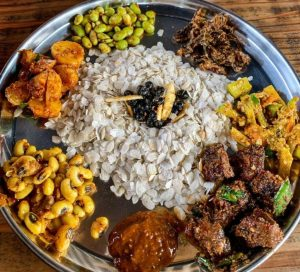
At traditional meals and feasts, everyone sits on a long mat (Sukul or Gundri, made from hay or woven grass) with legs folded. The meal starts with Chhyang — the rice wine that functions somewhat like wine does in other cultures, as both a social lubricant and a meal opener. Food comes out in courses, served onto tapari leaf plates.
This format is reserved for festivals, community meals, and significant occasions. Day-to-day meals are more straightforward: rice, vegetables, meat, and salad, eaten at home or at a local restaurant.
Where to Find Newari Khaja Set Near Me
If you’re looking for a Newari khaja set near you, the best options depend on where you are:
In Kathmandu Valley: Dedicated Newari restaurants are concentrated in Thamel, Patan (Lalitpur), and Bhaktapur. Areas like Kirtipur also have deeply traditional setups where the food and format are closer to what you’d eat at a community feast.
In other cities of Nepal: Most larger cities — Pokhara, Biratnagar, Dharan, Butwal — have at least a few Newari restaurants serving khaja sets, though the range of items is usually more limited than in the Valley.
Outside Nepal: Nepali restaurants in India, the UK, Australia, and the US increasingly carry Newari food items on the menu, particularly bara, chatamari, and Newari thali options. Availability varies widely.
For the most authentic version, the Kathmandu Valley is still where you want to be.
FAQs
What is Newari food?
Newari food is the cuisine of the Newar indigenous community of Nepal’s Kathmandu Valley. It includes over 200 dishes spanning meats, vegetables, beaten rice preparations, legume pancakes, sweets, and fermented items. The cuisine is influenced by both Indian and Chinese cooking traditions.
What is in a Newari khaja set?
A standard Newari khaja set includes chiura (beaten rice), bara (lentil pancakes), choila (spiced meat), alu tama (potato and bamboo shoot curry), tomato pickle, and often boiled eggs or soyabean preparations. Chhyang (rice wine) is served alongside.
What is Newari khaja set price?
In Kathmandu, a basic Newari khaja set typically costs between NPR 200–500. Larger sets at dedicated Newari restaurants can cost more depending on the number of items included.
What is Bara in Newari food?
Bara (also called Woh) is a black lentil pancake — one of the most iconic Newari food items. It’s made from ground black lentil batter, shallow-fried until crispy at the edges, and eaten with spicy tomato pickle. It appears in both everyday snack meals and full feasts.
What is Chatamari?
Chatamari is a thin rice flour crepe topped with minced meat, egg, or vegetables. It’s one of the most well-known Newari food items and sometimes gets called “Newari pizza,” though the comparison undersells it.
What is Chhyang?
Chhyang is a traditional fermented rice wine made and consumed by the Newar community. It’s served at meals, feasts, and festivals. It has a mild, slightly sour flavor and lower alcohol content than most commercial wines.
What is Newari shahi pulao?
Newari shahi pulao is a fragrant, spiced rice dish made for festivals and ceremonies. It’s typically prepared with basmati rice, whole spices, and sometimes meat or dried fruits, and served at weddings and special occasions.
What are popular Newari sweets?
The most well-known Newari sweets include Yomari (steamed rice flour dumplings with molasses filling), Lakhamari (hard fried sweet dough pastry), and Juju dhau (creamy buffalo milk yogurt from Bhaktapur). Sel roti, a crispy fried rice bread, is also widely eaten at festivals.
Related reading: Newari Culture and Festivals · Nepal’s Indigenous Food Traditions
Shop Now at AjaDynasty: Jewellery || Aroma Lamp
Sources: Newar community food documentation; Kathmandu Valley culinary research; traditional Newari feast practices

Get the Latest
Subscribe Now
Sign up for Aja Dynasty emails to be the first to see inspiring content, news, new product announcements and exclusive offers.
Rewards